If you’re looking to add CGM to your wellness practice, you’re not alone. Continuous glucose monitoring (CGM) is one of the fastest-growing tools in the wellness industry, and for good reason. Health coaches, nutritionists, functional medicine practitioners, and fitness professionals are integrating CGM into their care models to give clients real-time metabolic data, build more effective programs, and generate a new revenue stream in the process.
This guide walks you through exactly how to add CGM to your practice: what it involves, how to introduce it to clients, how to structure it within your existing offerings, and what platform to use to manage it all.
What Is CGM and Why Should You Add It to Your Practice?
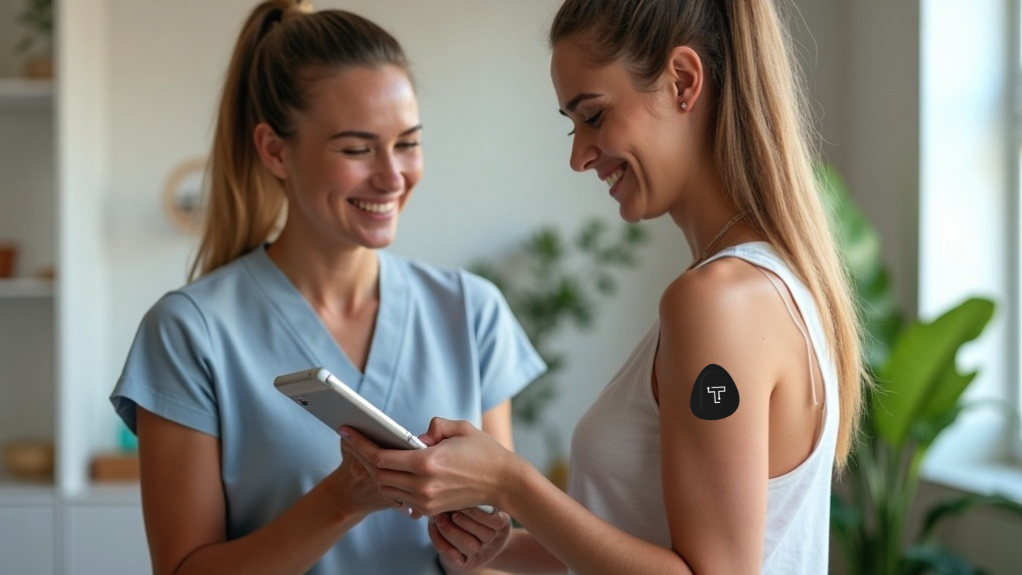
A continuous glucose monitor is a small wearable sensor, typically worn on the upper arm, that tracks glucose levels in real time, 24 hours a day, for up to 14 days. Unlike a one-time fasting blood test, CGM captures how a client’s glucose responds to every meal, workout, sleep cycle, and stressor throughout the day.
For wellness providers, this data is invaluable because it makes invisible patterns visible. Clients can see exactly how a high-carb dinner affects their overnight recovery, why they crash at 3pm, or how a 20-minute walk after eating changes their glucose trajectory. That level of immediate, personalized feedback drives behavior change in a way that generic advice simply cannot.
Research published in Diabetes Technology & Therapeutics found that real-time glucose feedback significantly improves adherence to lifestyle interventions—supporting what wellness providers are seeing firsthand in their practices. Providers using CGM report stronger client engagement, better compliance, and measurable outcomes that reinforce the value of their programs.
Theia Health, a CGM platform purpose-built for wellness providers, has processed over 197 million glucose readings across more than 6,300 health businesses, evidence that CGM adoption in the wellness space is no longer niche.
Step 1: Identify Which Clients Are a Good Fit
CGM is not a one-size-fits-all tool, but it applies across a wide range of wellness contexts. Strong candidates include:
- Clients focused on weight management or body composition
- Clients with energy crashes, brain fog, or mood fluctuations
- Athletes optimizing performance and recovery
- Clients in perimenopause or menopause navigating metabolic changes
- Anyone with a family history of metabolic conditions who wants to take a proactive approach
- Clients who are highly data-driven and want objective insight into their habits
The common thread is clients who would benefit from understanding how their lifestyle choices: food, sleep, stress, and movement, affect their metabolic health in real time.
Step 2: Choose How to Integrate CGM Into Your Offering
There are a few ways to structure CGM within your practice:
As a standalone add-on
Offer a 14-day CGM experience as an optional upgrade to any existing program. Clients wear the sensor, log their habits, and review the data with you in one or two dedicated sessions.
Built into a care plan package
Include CGM as a core component of a 1-month or 3-month coaching package. This approach gives CGM context, clients aren’t just collecting data, they’re working with you to interpret it and make changes. This tends to drive stronger outcomes and higher perceived value. Providers on Theia report a 15%+ uplift in care plan conversion rates when CGM is included as part of a structured package.
As a group challenge
Run a structured 14-day group program where multiple clients wear sensors simultaneously. Group challenges create accountability and community, and they allow you to use anonymized glucose data in group education sessions to illustrate how different habits affect metabolic health. For an example of how this works in practice, see how Debra Atkinson at Flipping 50 runs group CGM challenges with her membership community.
For a practical breakdown of how to price CGM into your care packages, see our guide to pricing CGM tech in your care plan package.
Step 3: Partner With a CGM Platform Built for Wellness Providers
To prescribe CGM to clients, you need a platform that handles the regulatory and logistics side, prescription fulfillment, sensor delivery, app onboarding, and data access, so you can focus on the coaching.
Theia Health is a CGM platform built specifically for wellness providers across 14+ provider categories including health coaches, nutritionists, naturopathic doctors, chiropractors, and fitness professionals. Theia handles:
- Prescription fulfillment and HIPAA compliance
- Direct sensor delivery to clients in under 5 business days
- Client app onboarding and setup
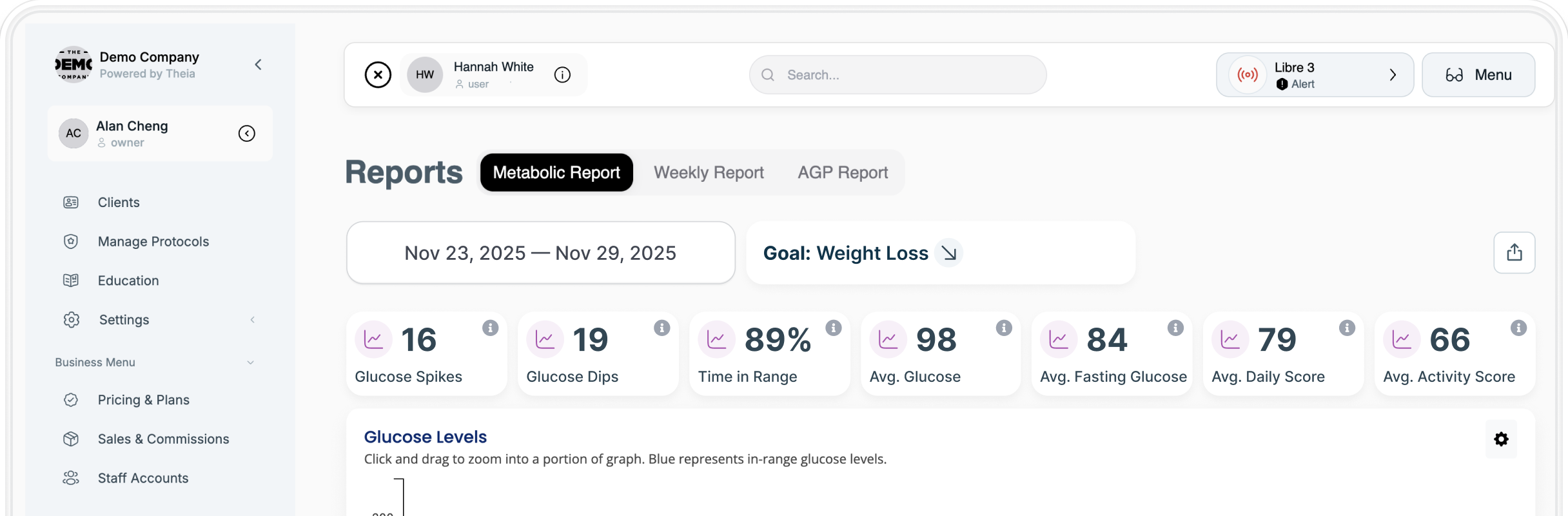
- A provider dashboard showing all client glucose data in one place
- An AI layer that translates raw glucose data into metabolic health scores
Providers on Theia earn 14%+ commission per sensor placed and generate 2–4x reorder income per client per year, making CGM one of the few wellness tools that pays for itself through passive revenue.
Step 4: Onboard Your First Client
Once you’re set up on a CGM platform, onboarding a client is straightforward:
- Introduce the concept: explain what CGM measures, why it’s relevant to their goals, and what they can expect to learn
- Place the order: the platform handles fulfillment and ships directly to the client
- Guide sensor application: most clients can apply the sensor themselves with minimal instruction; the app walks them through it
- Set a baseline week: ask the client to maintain their normal habits for the first few days before making any changes, so you have a true baseline to compare against
- Review the data together: schedule a mid-point and end-of-wear check-in to review patterns, identify key insights, and guide behavioral adjustments
The goal of the first CGM experience is not to overwhelm the client with data, it’s to surface two or three meaningful insights that change how they think about their habits.
Step 5: Use the Data to Deepen Client Relationships and Retention
CGM data is a conversation starter, not just a metric. When a client sees that their glucose spikes significantly after what they thought was a healthy breakfast, or that their levels stabilize dramatically when they sleep 7+ hours, it creates a moment of genuine discovery that no food journal or self-report can replicate.
A 2025 prospective study published in Primary Care Diabetes found that integrating CGM with personalized health coaching led to significant improvements in glycemic control and lifestyle behaviors, including increased physical activity and healthier dietary habits, across all participant groups.
Providers who use CGM consistently report that it improves client retention, increases program renewals, and makes it easier to demonstrate the value of continued coaching. The data creates accountability on both sides—clients stay engaged because they can see their progress, and providers have objective markers to track outcomes over time.
For an example of how this works in practice, see how Carrie Lupoli uses CGM data to coach her metabolic health clients and how Ashley Koff scaled a data-driven nutrition practice using Theia.
Is CGM Right for Every Wellness Practice?
CGM is a powerful tool but it’s not the right fit for every provider or every client. A few honest considerations:
- CGM requires a prescription in most jurisdictions, a wellness CGM platform like Theia handles this on your behalf, but it’s worth understanding how it works in your region
- Clients who are not data-driven or find tracking stressful may not get the same value from CGM as clients who engage actively with their data
- CGM works best when paired with a structured coaching framework, it’s a data layer, not a standalone program
The providers who see the strongest outcomes from CGM are those who integrate it as part of a defined protocol, not those who hand a client a sensor and check back in two weeks.
Key Terms
Continuous glucose monitoring (CGM): A wearable biosensor technology that measures glucose levels in the interstitial fluid beneath the skin in real time, providing continuous data over a 14-day wear period without the need for finger prick testing.
Metabolic health: A measure of how efficiently the body processes and uses energy. Key markers include blood glucose levels, insulin sensitivity, blood pressure, cholesterol, and waist circumference. Optimal metabolic health means all markers are within a healthy range without the use of medication.
Glycemic control: The management of blood glucose levels within a target range through lifestyle factors including diet, exercise, sleep, and stress management. In a wellness context, glycemic control refers to optimizing glucose stability to support energy, mood, and long-term health outcomes.
Interstitial glucose: The glucose concentration measured in the fluid surrounding cells just beneath the skin. CGM sensors measure interstitial glucose rather than blood glucose directly, readings may differ slightly from a finger prick test but provide a continuous, real-time picture of glucose trends throughout the day.
Glucose variability: The degree to which blood glucose levels fluctuate throughout the day. High glucose variability—characterized by frequent spikes and crashes, is associated with fatigue, brain fog, and poor metabolic outcomes even in individuals without diabetes.
Key Takeaways
- Adding CGM to your wellness practice gives clients real-time metabolic data that drives behavior change and improves outcomes
- CGM can be structured as a standalone add-on, built into a care plan package, or run as a group challenge
- A wellness CGM platform like Theia handles prescription fulfillment, shipping, onboarding, and compliance so you can focus on coaching
- The first CGM experience should surface 2–3 actionable insights, not data overload
- Providers using CGM report stronger client engagement, 15%+ higher care plan conversion rates, and improved retention
- Over 6,300 health businesses are already using Theia to integrate CGM into their practices
About the Author
Mishal Saeed is the Growth & Lifecycle Marketing Manager at Theia Health, a biosensor platform helping wellness practitioners integrate continuous glucose monitoring into their practices. With a background in customer success and health technology, Mishal works with providers across 14+ specialties to build education, content, and lifecycle programs that drive better client outcomes. She is based in Toronto, Canada.
References
- Park Y, Choi HR, Lee JE, et al. Impact of real-time continuous glucose monitoring and personalized digital health coaching on glycemic control and lifestyle in patients with type 2 diabetes and prediabetes. Prim Care Diabetes. 2025;20(1):61–67. https://doi.org/10.1016/j.pcd.2025.12.002
This content is intended for wellness and lifestyle professionals. CGM and related Theia Health products are not intended for the diagnosis, cure, management, prevention, or treatment of any disease or condition.